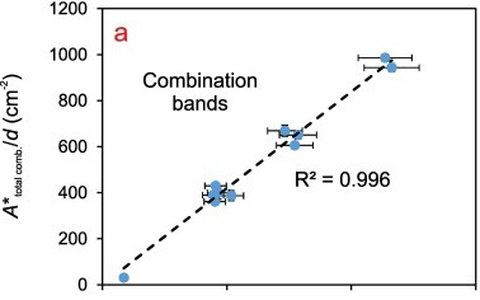
A viscosity model for hydrous andesitic melts: Insights from Sakurajima andesite
A viscosity model for hydrous andesite: Sakurajima melt is about nine times less viscous than thought.
Experimental volcanology & glass science · Rome
Our group measures how silicate melts flow, crystallise and freeze, from nanometre-scale structure to whole eruptions. Much of what we calibrate in the lab becomes free tools that anyone can use.
Marker: the selected melt, in the colour it glows at that temperature. Grey ticks: the other six melts at the same temperature. Everyday liquids at room temperature.
Drag to turn the globe; zoom with + and − (or Ctrl and scroll). Point at (or tap) a dot to see its name. Rings mark the volcanoes we have studied: click one (or tap it twice) to open its page.
Each dot is one of 3,343 volcanoes in the GEOROC database. Its colour is the viscosity that MELVIS predicts for the typical dry melt of that volcano: slide the temperature and watch the planet stiffen as it cools.
MELVIS is our free web application for the viscosity of volcanic melts: any major-element composition, with uncertainty, hydrous modelling and a global map of magmas.
Compositions: GEOROC (DIGIS Team, 2026), CC BY-SA 4.0. Viscosity: MELVIS anhydrous model (MYEGA), median composition per volcano.
The same magma leaves the same chamber. If its gas escapes on the way up, lava pours out. If the gas stays trapped, the magma fragments into ash. Choose one and follow the magma through the lens.
A viscosity model for hydrous andesite: Sakurajima melt is about nine times less viscous than thought.
One infrared calibration for water in glasses, from rhyolite to mantle peridotite.
An ERC Proof of Concept to turn volcanic ash into glass-ceramics.
Science here is a team effort. Petrologists, glass scientists and spectroscopists work on the same melts with different instruments.
Meet the group · See the laboratory · All co-authors
Everyone we have published with since 2012, in orange the group. Point at (or tap) a circle to see who it is.